Showing posts with label Quincy Jones. Show all posts

Friday, March 21, 2025

The beat goes on: Black Bag

Big-screen jazz scores clearly have become an endangered species, but good grief; I’ve not been able to showcase a new film release since Confess, Fletch came out in October 2022.

Thank goodness for director Steven Soderbergh and Belfast-born DJ-turned-composer/musician David Holmes, who’ve worked together since 1998’s Out of Sight, which was followed by Ocean’s Eleven and its two sequels. All four boasted sleek, groove-laden jazz scores that were long on percussion, electronic keyboards, fuzz guitar, sleek vibes, walking bass and plenty of rhythmic four- and eight-bar ostinatos.


But Holmes’ approach is a bit different this time out. Black Bag isn’t a larkish adventure like the four films mentioned above; David Koepp’s sleek, sexy and — above all else — smart script is solidly in the chill, back-stabbing spyjinks realm of John Le Carre and The Ipcress File. As a result, many of the cues in Holmes’ score are deliberately unsettling atmospheric synth and tension-laden ostinatos. Even so, true jazz elements are present in sufficient number to warrant mention here.


Veteran intelligence officer George Woodhouse (Michael Fassbender), an elite operative at Britain’s closely guarded National Cyber Security Unit (NCSC), is summoned to an off-site meeting by his boss, Philip Meacham (Gustaf Skarsgård). A dangerous top-secret software cyber-worm, code-named Severus, has been leaked: likely to Russian agents. Five of George’s colleagues are suspected, one of whom happens to be his beloved wife, Kathryn (Cate Blanchett), a powerful and trusted NCSC agent.


George hosts a dinner party that gathers all the suspects: his longtime friend, Freddie Smalls (Tom Burke), whose messy personal life has made him a security risk; ultra-cool upper-echelon agent Col. James Stokes (Regé-Jean Page); staff psychiatrist Dr. Zoe Vaughan (Naomie Harris); and satellite imagery specialist Clarissa Dubose (Marisa Abela).

The after-dinner chit-chat devolves into psychological warfare, with stakes that continue to raise during George’s week-long investigation.


As he explained during an interview with Edith Bowman on her Soundtracking podcast, Soderbergh asked Holmes for a score that often would make viewers “feel the clock.” The composer obliged with a score that evokes memories of Jerry Goldsmith’s work on 1964’s Seven Days in May, and Quincy Jones’ score for 1967’s The Deadly Affair.


The album’s 18 cues are arranged chronologically, with titles that match on-screen events. Thus, the first cue — “I’m Here to See Mr. Meacham” — sounds like foreboding footsteps and a heartbeat, as one of Soderbergh’s beloved lengthy tracking shots follows George into the restaurant where he’ll be given this difficult assignment. The subsequent cue, “Black Bag,” is a peppy blend of jazzy percussion and mildly disconcerting synth.


“Dark Windows” is a hypnotic drum ostinato, while “Iron Maiden” delivers the desired ticking-clock ambiance with rumbling percussion, snare drum and bass licks.


The aforementioned dinner party remains unscored, Soderbergh preferring to let Koepp’s psychologically fraught conversational exchanges emerge like verbal gunfire.


Contemplative bass riffs, bongos and a snare drum (“Fishing”) back George’s lake sojourn on his small outboard boat, the following morning, as he mulls over what he learned.


But then, an unfortunate twist: Something feels wrong about Kathryn’s brief visit to Switzerland (“Zurich”), and George’s suspicions are backed by propulsive drums and synth effects. Duplicity, double- and triple-crosses subsequently multiply among these six individuals, and the anxiety mounts as the week concludes; George’s apprehension is fueled by the suspensefully energetic “Friday.” The next several atmospheric cues employ unnerving single keyboard notes, drawn-out synth and rumbling percussion with another round of tick-tock elements, as Answers Are Revealed.

In the aftermath, playfully snarky bass riffs, bongos and that snare drum fuel “Feet First” during a telling elevator encounter. The final fleeting cue, “Of Course,” is a triumphant blast of drums, bass and keyboards.


Holmes’ entire score is brief, running just shy of 29 minutes. The two longest cues run 3 minutes, the shortest a mere 28 seconds. The album isn’t available on physical media, but can be obtained digitally from Amazon, Apple Music and numerous other options. Qobuz offers CD quality and Hi-Res 48 kHz tracks. 

Monday, July 8, 2024

Spotlight on Peter Gunn and Mr. Lucky

Film music journalist/historian Jon Burlingame has been an invaluable resource over the years; he’s also a thoroughly entertaining writer. I’ve long followed his Los Angeles Times and Daily Variety articles, and I often refer to his books: 1996’s TV’s Biggest Hits, updated and expanded last year, as Music for Prime Time; and 2012’s The Music of James Bond.

His just-published newest book is the perfect topic for this post: Dreamsville: Henry Mancini, Peter Gunn and Music for TV Noir. Had it existed while I was working on my crime/spy jazz project, it would’ve been footnoted extensively in the first volume’s Chapter 2. 


Jon was gracious enough to spend nearly an hour discussing what led to this book, at this particular point in time. After all, we’re talking about two TV shows — Peter Gunn and Mr. Lucky — that are more than six decades old. Aside from creator/producer/director/writer Blake Edwards, they also share a second, equally important individual: Mancini. The impact his music had on that show — and on TV and film scoring at that time, and later — cannot be overstated.


That became the obvious starting point for our chat.


“I’ve been a fan of Peter Gunn dating back to my childhood, via early 1960s reruns,” Jon explained. “When I got older, and moved to Los Angeles for work reasons in 1986, I discovered that the show was running five days a week on local television. I was thrilled, and started recording them. (This was long before they were commercially available on DVD.) I’ve also been a Mancini fan, dating back to the 1960s. I later had the opportunity to interview him and Blake Edwards, when I was writing regularly for the Los Angeles Times, in the late 1990s and early 2000s. 


“I wanted to contribute something to the Mancini Centennial, which is this year. I knew that two solid books on Mancini’s life and career already existed: his 1989 autobiography, Did They Mention the Music?; and John Caps’ excellent 2012 book, Henry Mancini: Reinventing Film Music. What was missing, though, was an in-depth look at that three-year period from 1958 to 1961, which became the launching pad for Mancini and his entire career. He and Edwards formed such a solid bond that Edwards essentially made Mancini his in-house composer for the rest of his career. 


“That period also led to Mancini’s big-screen success with “Moon River,” “Days of Wine and Roses,” “The Pink Panther,” “The Baby Elephant Walk” and all manner of other hits during the 1960s and ’70s. So I thought that a book focused on that three-year period, with Peter Gunn and Mr. Lucky, was worth doing.


“Besides,” Jon added, with a chuckle, “at my age, I didn’t want to write a book that I wouldn’t have fun with, and I knew this would be fun to write ... and it was.

“Actually, the research was more fun than the writing!”


Jon’s prose is engaging, as always, but I’m also impressed by the wealth of detailed information.


“The book is designed to satisfy two different constituencies,” Jon admitted. “First, it’s a ‘TV book’ about two shows, so I felt obliged to write about every episode of both shows, listing director, writer, guest cast and a little bit about the plot. 


“The second constituency is music fans, and/or people interested in Mancini, and his career. As a result, it was important — to me — to single out the musicians who played on all those shows. Luckily, it was mostly the same guys who played on every episode of both: Ronnie Lang, Gene Cipriano, Bob Bain, Ted Nash, Pete Candoli, Dick Nash, John(ny) Williams and others ... a real Who’s Who of late 1950s West Coast jazz.”

Monday, March 7, 2022

From the cutting-room floor: The Lost Man

This was a tough call.

The story certainly is ideal; this is a brooding crime drama in the classic all-will-not-go-well mold. But “brooding” also is an apt description of the bulk of Quincy Jones’ score: far more orchestral gloom than actual jazz cues. On top of which, the minimal jazz elements are further obscured by the numerous gospel and R&B tunes that director Robert Alan Arthur seems to favor over Jones’ contributions. Reluctant as I was, to discard a Quincy Jones score, at the end of the day there simply wasn’t enough jazz to justify inclusion.


********


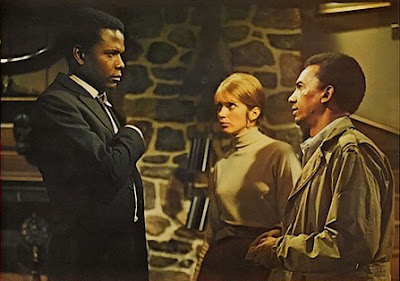
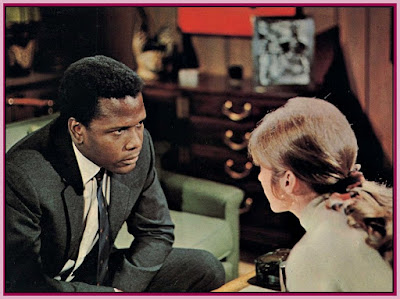
Time hasn’t been kind to 1969’s The Lost Man, which at this point is almost a lost movie (and an equally lost soundtrack album). The plot is a quaint relic of the late 1960s rise of Black militant groups, with star Sidney Poitier’s character displaying a level of calm nobility that seems out of place, given the era’s combustible national mood. Director Robert Alan Arthur’s script is a disguised remake of British author Frederick Laurence Green’s 1945 novel, Odd Man Out — adapted to the big screen in 1947, starring James Mason — with the then-contemporary Black militants standing in for that book’s focus on Northern Ireland’s WWII-era unrest.


Poitier stars as Jason Higgs, a lieutenant in a well-organized — but never identified — group of Black militants operating from the slums of an average American big city. Needing funds to help the families of imprisoned group members, Higgs leads a payroll heist that goes horribly wrong; he’s wounded while fleeing with the money, and — worse yet — kills somebody in the process. Higgs’ three confederates don’t last long on the run, but he briefly stays ahead of a massive police hunt, thanks to Cathy Ellis (Joanna Shimkus), a liberal social worker who has fallen in love with him. But the net tightens quickly, leading to a bleak conclusion lifted directly from Green’s novel.


By this point in their respective careers, Poitier and composer Quincy Jones had become a highly successful team; The Lost Man was the fourth of their seven big-screen collaborations, following (among others) In the Heat of the Night, and prior to that film’s sequel, They Call Me Mister Tibbs

Jones augmented the studio orchestra with jazz cats such as Bud Shank (reeds), Arthur Adams (guitar), Ray Brown and Carol Kaye (acoustic double bass), and Emil Richards (percussion). Given the inner city setting, and the importance that some of the characters place on church activities, Jones laced the score with numerous gospel numbers that he co-wrote with lyricists Dick Cooper and Ernie Shelby. The funk-laden title song is one such example: The film’s credits appear behind a grim montage of big-city slum life, while Jones’ catchy, percussive theme is augmented by whistles, vocal shadings and the voices of The Kids from PASLA. Their cheerful lyrics gradually are overpowered by rising horns and strings, anticipating the dangerous heist that is about to unfold.


Once the plan is set in motion, Higgs and his confederates exit their decaying tenement headquarters; Jones inserts an anticipatory cue that mimics footsteps before developing into a throbbing groove — ba-bum ... ba-bum ... ba-bum — given additional intensity with the insertion of bass, guitar and electric keyboard licks. (A variation of this tense, expectant cue repeats later, when the cops close in on two of Higgs’ associates.) The doomed heist kicks off to a similar percussive cue, which also introduces the film’s primary action theme: a tense, 2-2-2-3 horn motif backed by wicked bass licks. The cue initially sounds expectant, given Higgs’ careful planning, but the musical mood shatters as everything goes wrong. Moving forward, Jones’ occasional references to this theme reprise in slower, grimmer arrangements.


On a gentler note, Jones contributes a lovely, minor key lament — the melody taken by woodwinds, with soft piano comping — that is heard each time Higgs and Cathy share a quiet moment. Before the crime goes down, the cue’s mood is playful and exploratory, reflecting Cathy’s barely concealed wish that she and Higgs could become an item. Much later, once Higgs is on the run, Jones gives this love theme bleaker instrumentation: This final moment of intimacy will, indeed, be their last.


The various source cues include the reverential “He’ll Wash You Whiter Than Snow,” performed by a church choir that Higgs hears, in passing; and the R&B-hued “Try, Try, Try,” which emanates from a pier side restaurant/bar dubbed The Swingin’ Lighthouse. When two of Higgs’ confederates try to hide in a brothel, they party with the girls as a pair of saucy R&B tunes — “Sweet Soul Sister” and “Rap, Run It On Down” — play on a phonograph. (Alas, they’re betrayed by the brothel madam, who immediately calls the cops.)

Perhaps because of these gospel and R&B songs, Jones’ soundtrack earned LP release on the UNI Records label. UNI also released the title tune and one instrumental track — “Main Squeeze” — as a 45 single. Unfortunately, the album is dominated by those vocals; Jones’ instrumental underscore rates only four tracks. They’re excellent cues, but represent only a small portion of the thematic complexity that Jones wove into the entire score. The album finally was digitized for inclusion in Decca’s six-disc The Cinema of Quincy Jones box set, released in France in 2016. 

Wednesday, April 1, 2020

Greetings!

Welcome to ScreenActionJazz.com, the companion blog to my two-volume study of this genre — Crime and Spy Jazz on Screen, 1950-1970 and Crime and Spy Jazz on Screen Since 1971 — published by McFarland & Company.

If you've somehow found this blog before first, you can place advance orders via the McFarland links to the right. 

(And if you've arrived after finding the URL in purchased copies of one or both books, you've made a starving author very happy.)

My goal, with these two books, was to provide a contextual survey of action/spy/detective/crime jazz, from its television and film origins (1949 and '50, respectively) to the present day: a celebration of all the cool music by Henry Mancini, John Barry, Lalo Schifrin, Edwin Astley, Quincy Jones, Laurie Johnson, Jerry Goldsmith and hundreds more. Unlike the few existing books on this topic, I wanted to discuss the way in which a score is used within a movie or television show: how and why a composer's efforts helped — or sometimes hindered — the finished project.

And — equally important — the degree to which a director knew how to employ the cues for maximum impact (along with the lamentable cases where a director clearly didn't have the slightest idea how to effectively place music).

This project began not quite five years ago, as a pitch for a single volume not to exceed 125,000 words. (Boy, that was naïve!) After spending months building lists of potential candidates that fit the plot criteria, I wound up with 486 films and 750 TV shows; they were whittled down to 350 and 206, respectively (the others discarded for their lack of jazz scores).

Then came 3-1/2 years of viewing, listening, analyzing and then writing, with the resulting manuscript running just shy of 600,000 words. Okay, fine; first drafts are over-written. Several rounds of judicious pruning later, I wound up with 250,000 words: still far too many. But at this point, I knew that further trimming would have deleted too much of the "good stuff." The text would have been compromised beyond repair, destroying my intent to supply a truly definitive study of this jazz sub-genre.

Fortunately, the kind folks at McFarland agreed with my proposal to re-write the contract for a two-book set, thus preserving every word of that final draft.

Of course, a project of this sort begins to go "out of date" the nanosecond after publication. While it's true that the golden age of jazz scores is decades behind us, with scant few new ones debuting, it's important to acknowledge those that do arrive. That'll be one of this blog's functions: to serve as an ongoing update.


Late 2019's Motherless Brooklyn, to cite a recent example, arrived after these books "went to bed." Its sensational jazz score, boasting considerable work by Wynton Marsalis (among others), will be covered in a future post.

Of equal importance, this blog also will allow me to discuss films and TV shows that I either overlooked — such as 1989's Harlem Nights (and how I missed that one is a mystery for the ages) — or simply didn't know about until recently, such as the 2016 miniseries Four Seasons in Havana.

I also expect to hear from readers demanding to know how I possibly could have forgotten about this movie, or that TV show. All such input is welcome, although please take note of the books' limitations (and mine). Although intended to be a definitive study of American and (to a slightly lesser degree) British output, I had to hold the line at only occasional acknowledgments of international entries from farther afield. As an obvious example, I've no doubt an entire book could be devoted to 1960s and early '70s Italian spy jazz, given all the secret agent knock-off movies that were cranked out, in the wake of '60s Bondmania. Ergo, please don't take it personally if I've omitted one of your favorite films or TV shows, or completely "overlooked" a particular composer. Or two. Or three. Such decisions were borne of practicality, not prejudice.

I hope this becomes a lively forum where fans can help each other empty their bank accounts, in pursuit of ever more sensational jazz scores.

Let's keep on swinging!